Human-Robot Teamwork Requirements Taxonomy
A NASA- and VeTSS DSTL-funded taxonomy of Human–Robot Teamwork requirements, grounded in international standards and validated across six domains.
Read more →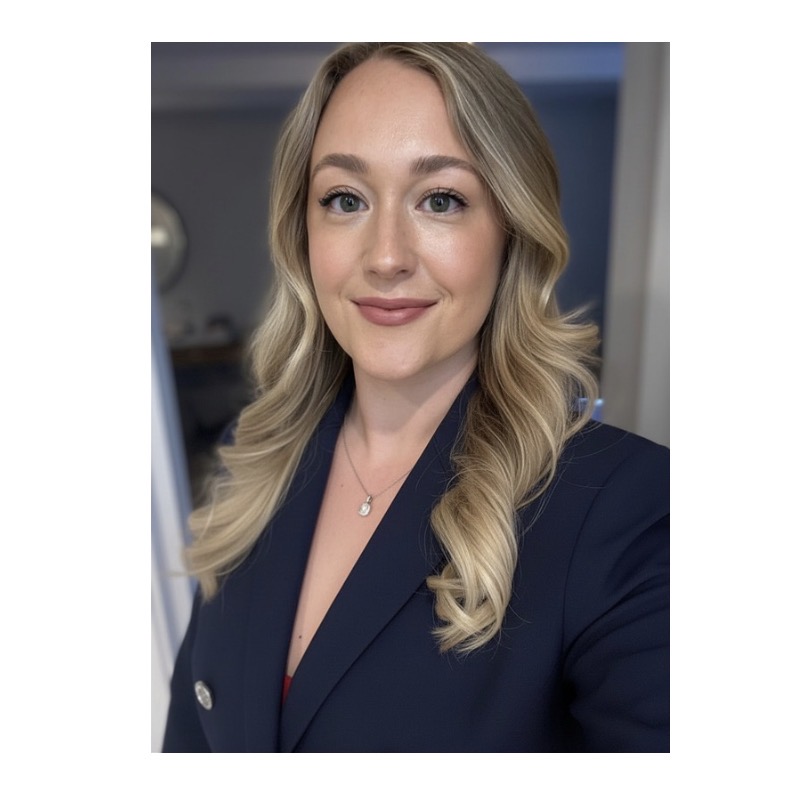
Research Scientist & AI Development Consultant
Trustworthy & Responsible AI · Regulated Environments
I’m a Research Scientist at the University of Manchester, where I lead NASA- and DSTL-funded research on Human-Robot Teamwork requirements and explainable AI for safety-critical, regulated environments, spanning nuclear, national security, and critical national infrastructure. I also work as an AI Development Consultant, building and shipping production AI systems, from RAG pipelines to human-in-the-loop automation, for clients in regulated sectors.
A NASA- and VeTSS DSTL-funded taxonomy of Human–Robot Teamwork requirements, grounded in international standards and validated across six domains.
Read more →A LangGraph pipeline that reads invoices with a self-hosted vision-language model, validates them against reconciliation rules, and routes exceptions to human review.
Read more →A well-tested prototype RAG system for querying UK company filings, engineered to eliminate hallucinated financial figures.
Read more →A human-in-the-loop pipeline that turns raw documents into clean, labeled datasets, reviewed through a local Streamlit UI and refined by feeding accepted corrections back into the model as few-shot examples.
Read more →An end-to-end MLOps pipeline that detects and classifies padel shot types from match video.
Read more →PhD Computer Science
Thesis: “Enhancing Human-Robot Interaction in Nuclear Environments: Explainability Requirements for Autonomous Systems.” Built and validated an explainable AI system used to justify autonomous robot deployment to nuclear regulators, partnering with RAIN (£112M UKRI/EPSRC programme) and nuclear operators.
MEng Robotics, Autonomous & Interactive Systems (1st Class Hons, Distinction)
MEng project: designed a cognitive architecture for scalable robot control in hazardous environments, published at IROS 2019. BEng project: built an ML-enhanced laparoscopy tool with real-time haptic feedback for surgeons. Deputy Principal’s Award for Academic Excellence, 2017/18 & 2018/19.
As Principal Investigator on NASA- and VeTSS DSTL-funded programmes (the latter a competitively awarded £50k grant with a 7% acceptance rate), I lead development of a Human-Robot Teamwork requirements taxonomy validated across six domains, including a catalogue of 21 explainability requirement patterns formalised in NASA’s FRET tool and validated via NuSMV equivalence checking. I received my PhD from the University of Manchester for my work on “Enhancing Human-Robot Interaction in Nuclear Environments: Explainability Requirements for Autonomous Systems”, partnering with the £112M UKRI/EPSRC RAIN programme and nuclear industry stakeholders.
Organiser of a workshop at TAROS 2026 on requirements and explainability for human–robot teams.
Visit workshop site →Co-organiser, with Marie Farrell, Divya Gopinath, and Anastasia Mavridou, of a workshop at NASA Formal Methods (NFM) 2026 on the synergy between formal requirements engineering and AI for assuring trustworthy learning-enabled systems.
Visit workshop site →Organising Committee Member for the 19th International Conference on Integrated Formal Methods, hosted at the University of Manchester in November 2024.
Visit conference site →A Taxonomy of Human-Robot Teamwork Requirements
Engineering Reliable Autonomous Systems: Challenges and Solutions
All Dressed Up: Requirements for Human-Robot Teamwork
Eliciting Explainability Requirements for Safety-Critical Systems: A Nuclear Case Study
Explainability Pattern Specification for Human-Robot Teamwork
Towards A Catalogue of Requirement Patterns for Space Robotic Missions
🏆 Best Paper Award
What to Explain and How? The Challenges and Future of Using Large Language Models to Generate Explanations for Lawyers in Autonomous Car Accidents
Enhancing Human-Robot Interaction in Nuclear Environments: Explainability Requirements for Autonomous Systems
Should AI Systems in Nuclear Facilities Explain Decisions the Way Humans Do? An Interview Study
An Abstract Architecture for Explainable Autonomy in Hazardous Environments
Robots in the Danger Zone: Exploring Public Perception through Engagement
Introducing a Scalable and Modular Control Framework for Low-Cost Monocular Robots in Hazardous Environments
For a full, up-to-date CV covering education, publications, and funding, please contact me via email or connect on LinkedIn.
Eligible for UK security vetting.